

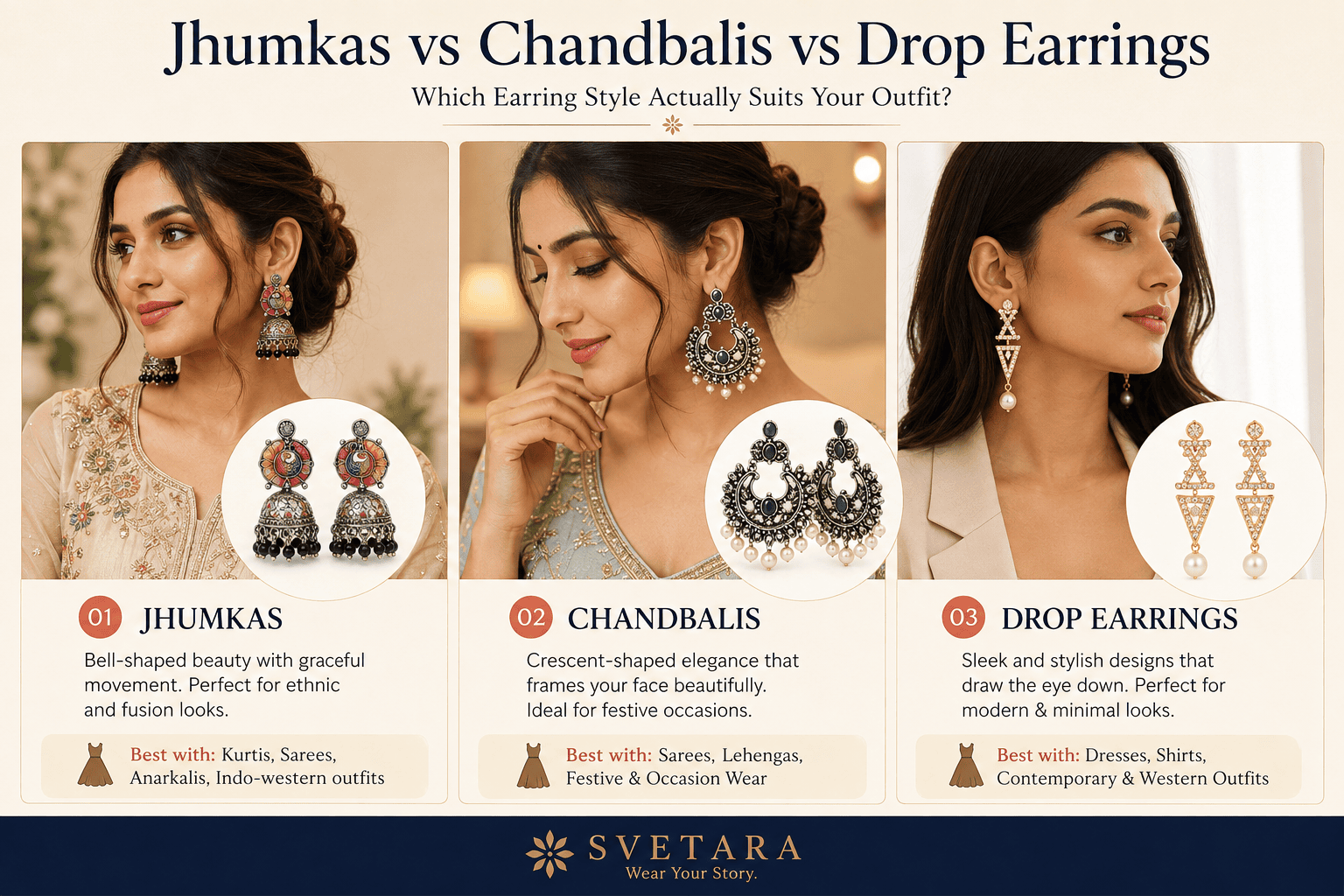
Jhumkas, chandbalis and drop earrings may all hang below the ear, but they create very different styling effects. One gives you a recognisable Indian dome, one spreads around the face through a crescent structure, and one pulls the eye downward through a cleaner vertical line.
Choose jhumkas when you want Indian character and bell-shaped movement. Choose chandbalis when you want width and a more dramatic face-framing effect. Choose drop earrings when you want a cleaner vertical line that can move easily between Indian and Western outfits.
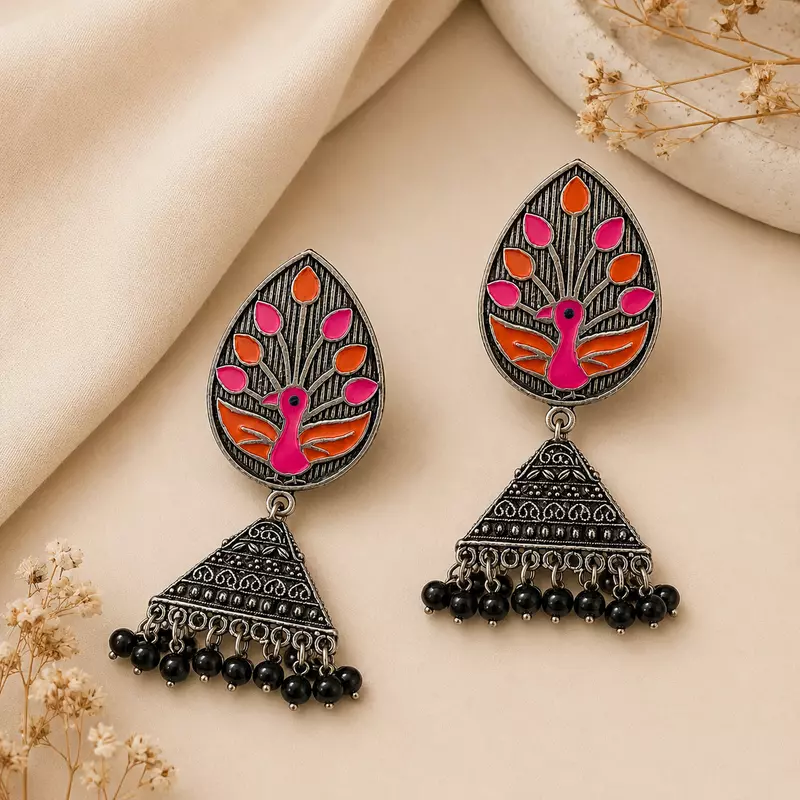
Rangrez Peacock Enamel Oxidised Jhumka Earrings
The triangular engraved jhumka section and hanging black beads create the recognisable jhumka movement, while the colourful peacock motif gives the pair a younger fusion personality.
Strong with:Kurtas · cotton sarees · shirts · Indo-western outfits
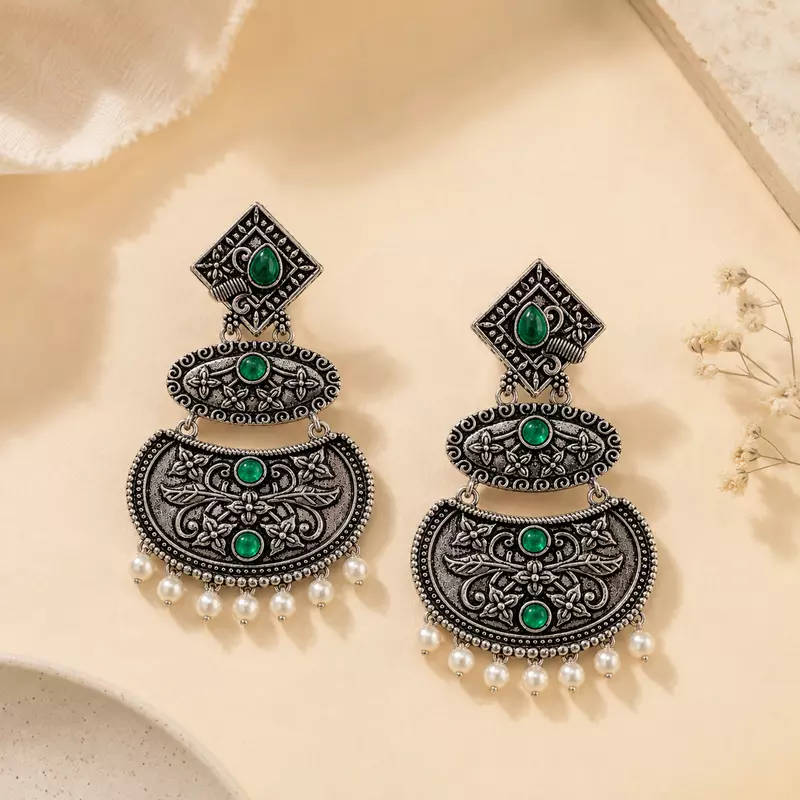
Mrinalika Green Stone Pearl Oxidised Chandbali Earrings
The broad curved lower section produces the characteristic chandbali width, while green stones and pearl drops add contrast against the oxidised silver-tone structure.
Strong with:Sarees · kurtas · lehengas · festive fusion

Celestia Pearl Triangle Crystal Gold-Tone Drop Earrings
Celestia makes the difference particularly easy to understand: the design extends downward rather than forming a jhumka dome or broad chandbali crescent.
Strong with:Dresses · shirts · evening tops · contemporary sarees
For the wider earring vocabulary — including studs, hoops, danglers and other silhouettes — see our complete types of earrings guide .
1 Jhumkas: when you want movement with unmistakable Indian character
The easiest way to recognise a jhumka is the bell or dome structure toward the bottom. That rounded hanging element creates movement and gives the earring its familiar Indian identity.
Jhumkas work naturally with kurtis, anarkalis and sarees. But modern versions with enamel, textile details or unusual colours can also work beautifully against shirts, denim and dresses.
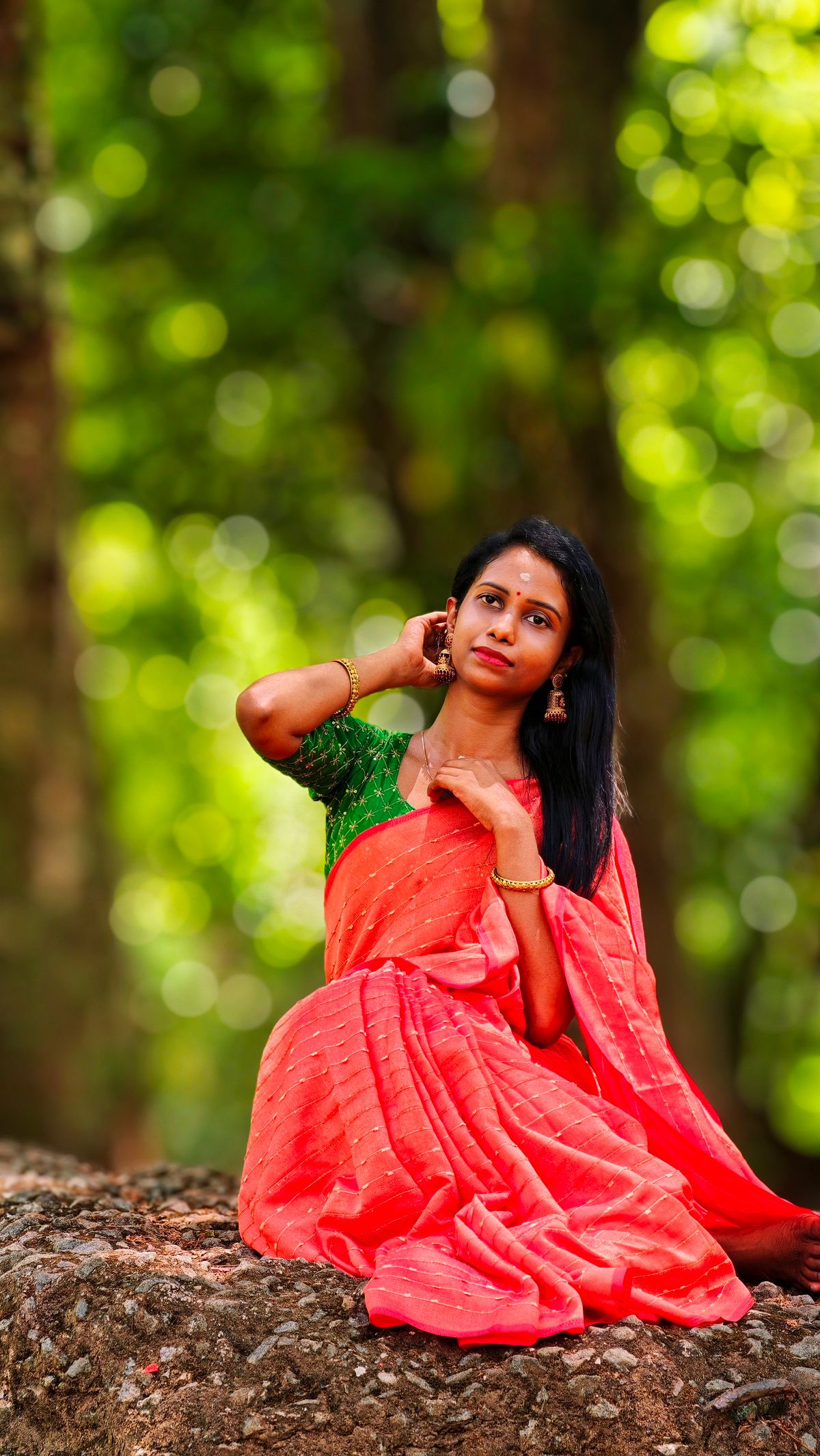
A polished traditional fashion reference
The jhumkas are clearly visible beside the face while the saree provides enough outfit context to show how the earrings work as part of the complete look.
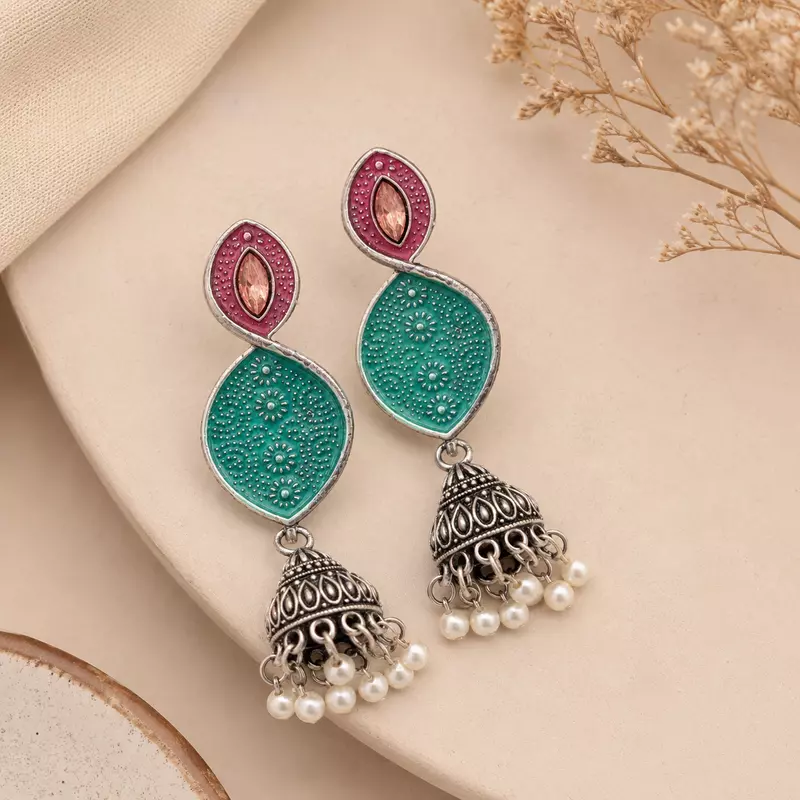
Madhavi Teal and Rose Enamel Oxidised Jhumka Earrings
Madhavi is a stronger editorial example than recycling the same blue jhumka again. It combines muted rose, teal enamel, a peach-coloured stone, an engraved silver-tone jhumka dome and pearl drops.
View MadhaviMadhavi is currently described by SVETARA as a medium-sized jhumka for sarees, lehengas, anarkalis, festive suits, kurtas and Indo-western outfits. :contentReference[oaicite:1]{index=1}
For more fusion combinations, continue with our Indian jewellery with Western outfits guide .
2 Chandbalis: when you want the earrings to frame the face
A chandbali changes the visual direction. Instead of ending mainly in a bell-shaped dome, the design spreads more broadly around the lower ear through a curved or crescent-inspired structure.
That width makes chandbalis excellent for festive sarees, wedding guest looks, lehengas, anarkalis and occasion outfits where the earrings should be noticed immediately.
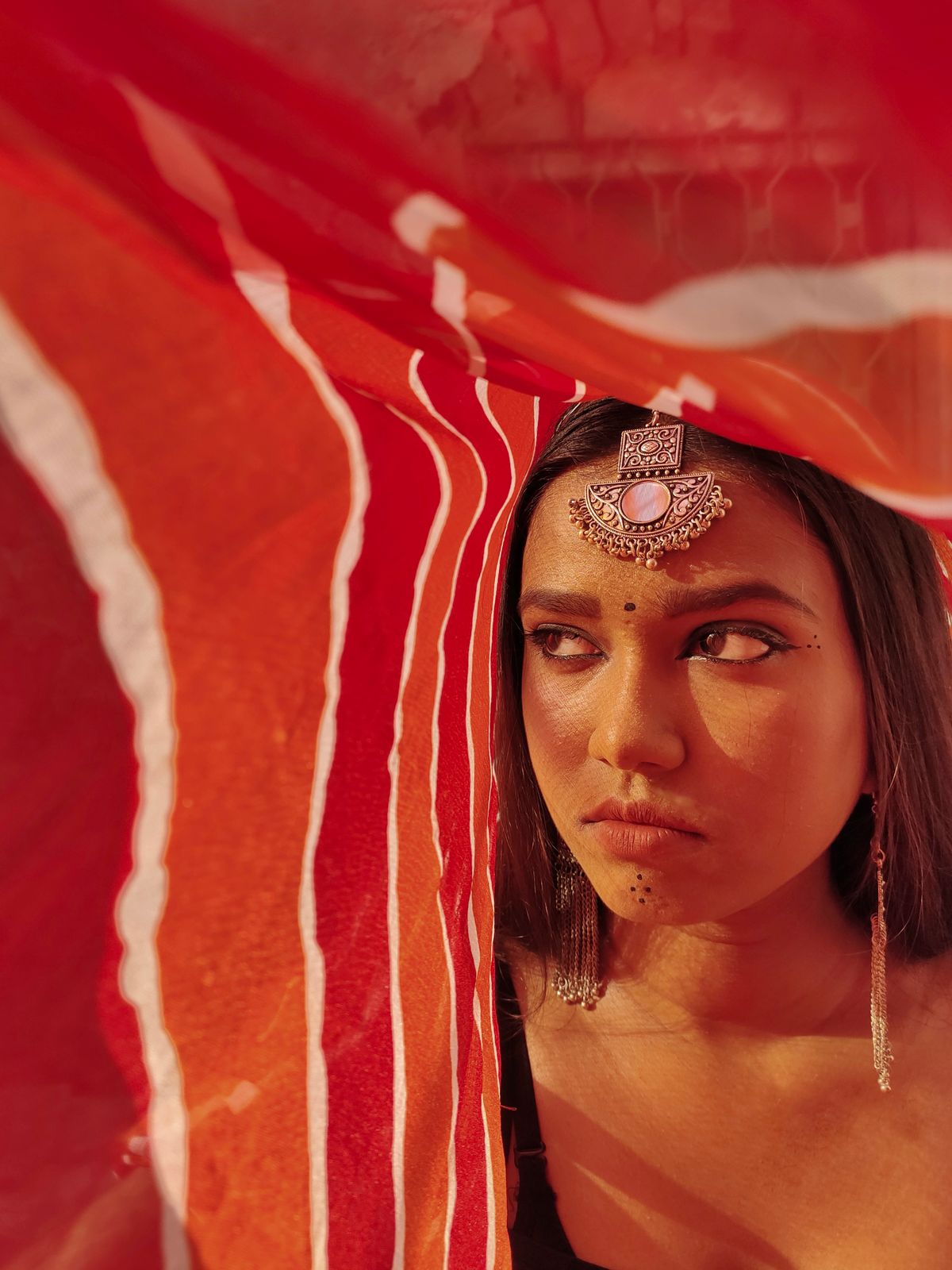
Width changes the whole portrait
The large traditional earrings occupy clear visual space beside the face. This is the styling effect to look for when choosing a chandbali-led outfit.
Mrinalika Green Stone Pearl Oxidised Chandbali Earrings
Mrinalika gives this article a very different chandbali direction: oxidised silver tone, green glass stones, floral scrollwork and white pearl drops rather than another blue-and-gold pair.
View MrinalikaThe current product page describes Mrinalika as a three-part oxidised chandbali with green stones and white faux pearl drops, designed for sarees, kurtas, lehengas and Indo-western looks. :contentReference[oaicite:2]{index=2}
Put the earrings on before choosing your necklace. A wide statement earring may already provide enough visual weight around the face.
3 Drops: when you want length rather than width
Drop earrings are visually simpler to read. The design extends below the earlobe and pulls the eye downward instead of creating the rounded dome of a jhumka or the wider decorative structure of a chandbali.
That vertical direction is particularly useful with dresses, shirts, blazers, contemporary sarees, one-shoulder outfits and cleaner evening looks.
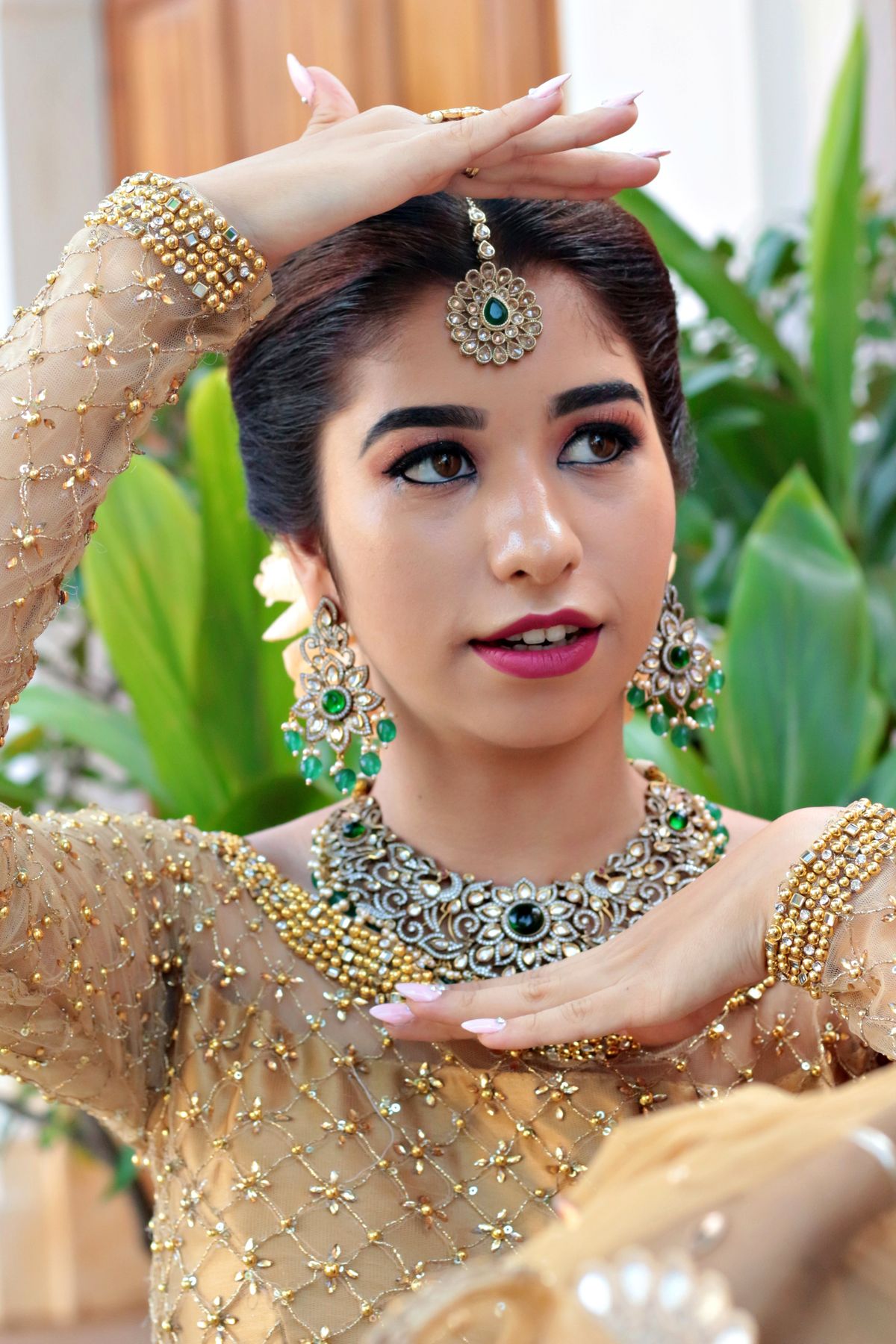
A more polished vertical silhouette
The hanging gemstone earrings draw the eye downward and work with the model's more formal fashion styling without creating the width of a large crescent earring.
Celestia Pearl Triangle Crystal Gold-Tone Drop Earrings
For the drop section I am keeping Celestia because it is one of the clearest true drop examples currently established on SVETARA: the geometry and pearl detail follow a distinctly vertical structure.
View CelestiaTraditional shape does not mean one jewellery aesthetic
This is important when comparing categories. Two pieces can both be jhumkas and still create completely different moods.
Rangrez Peacock Enamel Oxidised Jhumka Earrings
Rangrez uses pink and orange enamel, a peacock motif, oxidised silver tone and glossy black bead fringes. It still belongs to the jhumka family, but the mood is younger and more fusion-oriented than a conventional antique-gold jhumka.
SVETARA currently positions Rangrez for college outings, festive occasions, cultural events and contemporary ethnic-fusion styling. :contentReference[oaicite:3]{index=3}
View RangrezJhumka vs chandbali vs drop earrings: the practical comparison
| Feature | Jhumka | Chandbali | Drop |
|---|---|---|---|
| Main shape | Bell / dome | Broad curved / crescent-style form | Vertical hanging line |
| Visual movement | Rounded and swinging | Wide and face framing | Downward |
| Strongest styling identity | Indian / fusion | Festive / statement | Contemporary / versatile |
| Excellent with | Kurti, saree, anarkali | Festive saree, lehenga, occasion wear | Dress, shirt, party outfit, modern saree |
| Western crossover | Strong when intentionally contrasted | Bold statement crossover | Easiest |
| Best when you want | Indian character | Width and impact | Length and clean movement |
Jhumka = dome and Indian movement.
Chandbali = width and face framing.
Drop = vertical movement and cleaner styling.
Which one should you wear with your outfit?
Try Madhavi or Rangrez when you want colour and oxidised texture rather than a conventional all-gold ethnic look.
The outfit has enough scale to support more width around the face.
Choose chandbalis instead when the earrings need to create the main occasion statement.
The cleaner vertical line works particularly well with fluid drapes and modern blouses.
For a stronger fusion look, deliberately switch to a colourful oxidised jhumka.
A strong pair can provide enough occasion presence without a heavy necklace.
Choose jhumkas only when you specifically want Indian-Western contrast.
Oxidised, colourful and unconventional versions are particularly useful here.
For kurtis, anarkalis and salwar suits, see our complete Indian outfit jewellery guide .
Which one suits your face shape?
Do not treat this as a rigid rule. Think about the direction the earring creates. Drops usually emphasise vertical length. Chandbalis add width around the lower face. Jhumkas combine a narrower upper section with a rounded lower dome.
For a more detailed decision, use our earrings for face shape guide .
Which one works best with open hair?
With hair worn open, the earring needs enough contrast, width or length to remain visible. Strong chandbalis and medium-to-large jhumkas survive open hair particularly well, while longer drops can create a clean line through the hair.
What about your neckline?
Large earrings often work best when you resist filling every available space. High necklines and embroidered blouses can look cleaner with statement earrings and no necklace. Open necklines give you more freedom to add neck jewellery if the complete look genuinely benefits.
Use our neckline and jewellery guide when earrings and necklace are competing for attention.
Which style should you buy first?
If you mostly wear Indian clothes, start with a jhumka. If you dress for weddings and festive functions regularly, add a chandbali. If your wardrobe moves constantly between Indian and Western clothes, a modern drop is normally the easiest crossover.
And do not build a jewellery box where every earring performs the same job. Our Gen Z earring wardrobe guide explains that capsule approach.
5 mistakes when comparing jhumkas, chandbalis and drops
Shape changes the outfit more than people realise.
2. Calling every hanging earring a drop.
Jhumkas and chandbalis have their own recognisable structures.
3. Choosing the biggest earring simply because the occasion is formal.
Scale still needs to work with your hairstyle, face and clothing.
4. Adding a necklace automatically.
A strong chandbali or jhumka may already complete the upper half.
5. Assuming traditional earrings require traditional outfits.
Colourful jhumkas and oxidised chandbalis can work extremely well in controlled Indo-western styling.
Frequently asked questions
What is the difference between jhumkas and chandbalis?
Jhumkas are recognised mainly by their bell or dome-shaped lower section. Chandbalis are broader and use a curved or crescent-inspired structure that creates more width around the face.
What is the difference between jhumkas and drop earrings?
A jhumka uses a recognisable dome or bell element, while a drop earring is defined more broadly by a design that extends vertically below the earlobe.
Which is better with a saree: jhumkas or chandbalis?
Both work. Jhumkas create a more classic Indian mood, while chandbalis are useful when you want a wider, stronger festive statement.
Can drop earrings be worn with Indian outfits?
Yes. Drop earrings work with sarees, kurtis and anarkalis, especially when you want a cleaner or more contemporary jewellery direction.
Can jhumkas be worn with Western outfits?
Yes. Colourful or oxidised jhumkas can create a deliberate fusion contrast with shirts, denim, dresses and other Western outfits.
Are chandbalis only for weddings?
No. Medium chandbalis can also work for festive lunches, dinners, cultural events, parties and Indo-western styling.
Which style gives the strongest vertical effect?
Longer drop earrings generally create the clearest downward line. Chandbalis usually create more width, while jhumkas create rounded movement through the lower dome.
Explore SVETARA
Do not just match the colour. Choose the silhouette.
Go jhumka for Indian movement, chandbali for face-framing width or drop earrings for a cleaner vertical line.
Explore SVETARA Earrings


