






Layered necklaces can make even a very simple outfit feel intentionally styled. But when every chain sits at the same height, pendants compete with each other or delicate chains twist together, the result can quickly move from effortless to cluttered.
Good necklace layering is mostly about creating space. Different lengths, visual weights and pendant positions allow several necklaces to behave like one balanced composition rather than several separate pieces fighting for attention.
How do you layer necklaces properly?
Start with the shortest necklace and build downward. Each necklace should occupy its own visual level instead of sitting directly on top of another chain.
As a starting point, try leaving roughly 5–8 cm of visible difference between adjacent necklace levels. The exact gap will depend on your neck, neckline, pendant size and the actual necklace lengths. If you are deciding which necklace forms and lengths to combine, see our types of necklaces guide .
What is the easiest necklace layering formula?
If you are new to layered necklaces, begin with two pieces rather than three or four.
The empty space between the two layers keeps the combination clean and makes tangling easier to manage.
Keep at least one of the three pieces visually simple so the entire stack does not become equally busy.
How do you keep layered necklaces from tangling?
Tangling happens because chains move independently while you walk, sit, turn your neck or adjust clothing. Very similar chains can twist around each other especially easily.
Separate the lengths
Necklaces sitting at clearly different heights have less opportunity to overlap continuously.
Vary chain weight
Combining one fine chain with a slightly more substantial chain can reduce the tendency for two nearly identical chains to twist together.
Put weight lower down
A pendant on the longer chain can help keep that necklace hanging downward instead of constantly floating into the upper layer.
Use a separator if needed
Multi-necklace clasps or necklace separators can hold individual chains in more consistent positions when you regularly wear several layers.
Do layered necklaces need to be different lengths?
Usually, yes. Length difference is what makes individual necklaces visible.
If two pendants land at almost the same point, they may knock together, cover one another or visually create one crowded area.
How many necklaces should you layer at once?
Two or three necklaces are the easiest combinations for most everyday outfits. Four or more can work, but they require more deliberate control of chain thickness, pendant scale and spacing.
More necklaces do not automatically create a better layered look. Often, two well-separated pieces look more sophisticated than five chains occupying almost the same area.
| Number of Layers | Effect | Best For |
|---|---|---|
| 1 | Clean and minimal | Office, high-detail outfits, everyday wear |
| 2 | Easy layered look | Beginners, shirts, dresses, casual wear |
| 3 | Clearly styled composition | Parties, open necklines, fashion-led outfits |
| 4+ | Strong maximalist statement | Deliberate fashion styling with simple clothing |
Should the shortest necklace be the simplest?
Often, yes. A simple upper chain gives the eye somewhere to begin before moving down toward the more decorative pieces.
This is not an absolute rule, but a reliable combination is:
Where should the biggest pendant go?
The largest or visually strongest pendant usually works best as the lowest layer because it creates a natural endpoint for the necklace composition.
Placing a very large pendant between two delicate necklaces can make the layering feel visually interrupted rather than progressive.
Can you mix different chain styles when layering necklaces?
Yes. In fact, slight differences in texture can make layering more interesting and can help individual chains remain visually distinct.
You might combine a very fine chain with a slightly more structured chain, a delicate pendant with a plain chain, or polished links with a subtle textured piece. Pearl-accented necklaces can also soften a layered stack; for outfit ideas, see our pearl jewellery styling guide .
Can you mix gold-tone and silver-tone necklaces?
Yes. Mixed-metal layering can look contemporary when it feels deliberate rather than accidental.
An easy way to begin is to use one piece that already contains more than one finish, then repeat those tones through the other necklaces or your watch, bracelet or earrings.
Do all layered necklaces need pendants?
No. In fact, using a pendant on every necklace can quickly make the centre of the outfit look crowded.
A cleaner formula is to combine one plain or lightly detailed chain with one or two pendant necklaces.
How do you layer necklaces with a choker?
A choker naturally creates the highest point of the necklace stack. Add a clearly longer pendant or necklace below it rather than placing another piece immediately beneath the choker.
Because a choker already occupies significant visual space, the lower necklace often looks better when it is relatively simple. If you are choosing a choker for sarees, lehengas or dresses, our choker necklace buying and styling guide is a useful next read.
Which necklace layers work with different necklines?
Neckline shape changes how much space your necklace stack has to work with. For a complete neckline-by-neckline reference, see our jewellery for every neckline guide .
| Neckline | Layering Approach | Why It Works |
|---|---|---|
| V-neck | Two descending pendant lengths | Repeats the downward shape of the neckline |
| Open shirt | Short chain + medium pendant | Sits naturally inside the open collar |
| Scoop neck | Two or three curved layers | Uses the open chest area without competing with fabric |
| Square neck | Simple shorter layer + pendant | Softens the strong geometric neckline |
| Off-shoulder | Fine layers or statement necklace | The open neckline gives jewellery visual space |
| High neck | Usually one longer necklace | Multiple short layers may disappear against the fabric |
How do you layer necklaces with a white shirt?
A white shirt is one of the easiest backgrounds for layered necklaces because it gives the jewellery clean visual contrast.
Leave one or two buttons open and place a shorter necklace near the collarbone with a second pendant slightly lower. For more ways to combine Indian jewellery with shirts, dresses and other contemporary clothing, see our Indian jewellery with Western outfits guide .
How do you layer necklaces with dresses?
Let the neckline determine how many layers you need. A plain V-neck or scoop-neck dress can support two or three necklaces, while a heavily embellished dress may look better with one necklace and stronger earrings.
With a black or monochrome dress, necklace layering can become the main decorative element of the entire outfit.
Can you layer necklaces with kurtis?
Yes, particularly with solid-colour or minimally embroidered kurtis. Fine gold-tone chains, pendants and layered traditional necklaces can all work.
If the kurti has elaborate embroidery around the neckline, however, multiple necklaces may compete with the garment. In that situation, earrings are often a stronger styling choice.
Can you layer necklaces with a saree?
Yes. Sarees can support anything from delicate two-chain layering to elaborate traditional layered necklace sets.
With contemporary sarees, fine chains and pendants can create a modern look. For weddings and festive occasions, a pre-layered Kundan necklace can provide the layered effect without requiring several separate chains.
Everyday necklace layering vs festive layering
SVETARA necklace examples for building a layered jewellery wardrobe
The necklaces below are real current SVETARA designs. They illustrate different roles a necklace can play in a layered wardrobe. Because exact chain lengths and compatibility vary, treat them as styling examples rather than assuming every piece below should automatically be worn together.
A delicate gold-tone chain with a two-tone butterfly pendant. Its lighter visual character demonstrates the kind of piece that can form a subtle layer within everyday necklace styling.
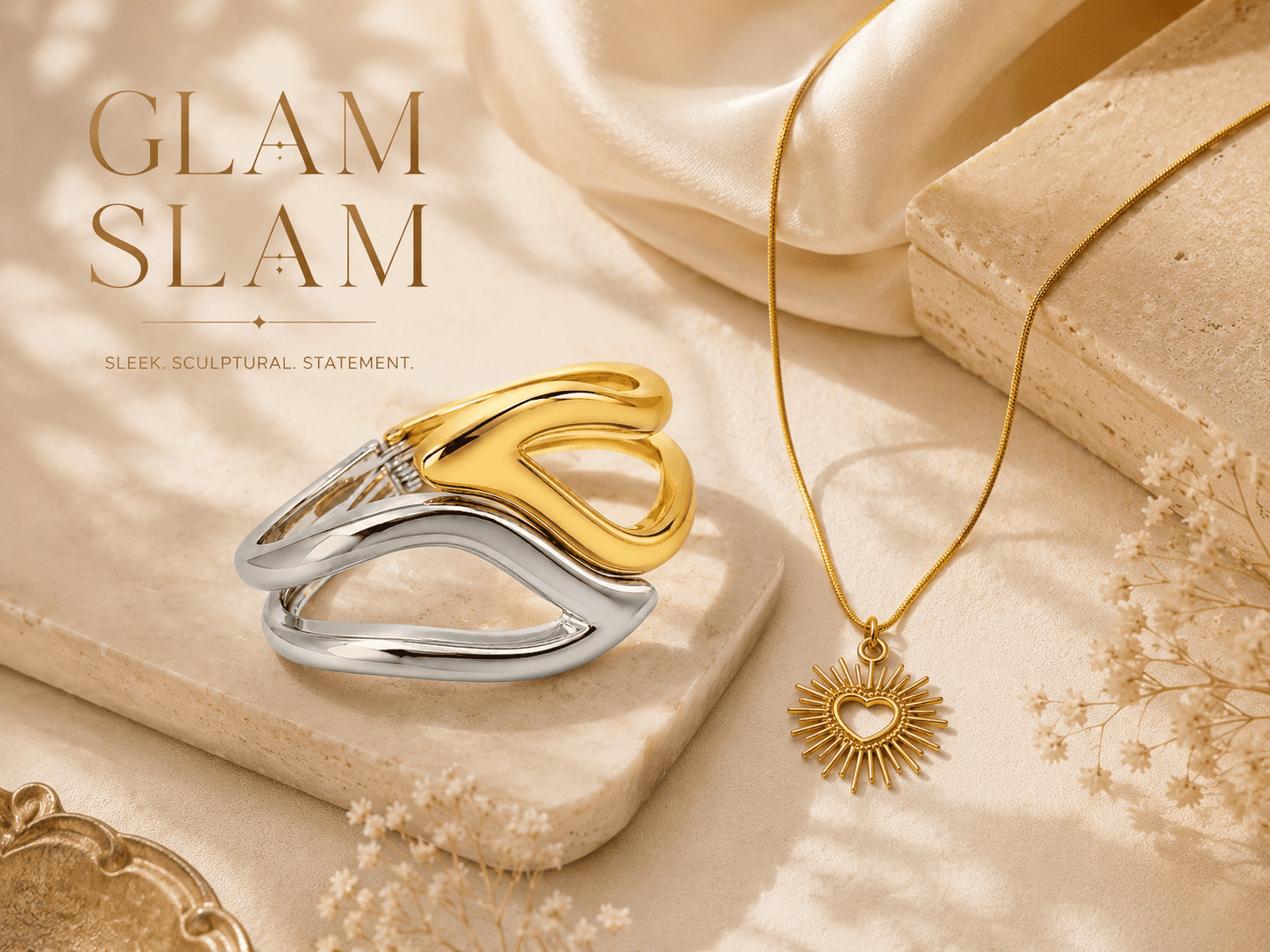
View NecklaceA lightweight open-heart pendant surrounded by fine sunburst detailing. A defined pendant like this can provide a clear focal point in a simple necklace composition.
View PendantThe interlocking heart motif combines gold-tone and silver-tone detailing, making it a useful example of how mixed-metal accents can be introduced without making an outfit feel visually complicated.
View NecklaceMultiple rows of polished Kundan stones create the layering within a single coordinated necklace, offering a more traditional approach for weddings, festive occasions and ethnic dressing.
View Layered SetWhat are the biggest necklace layering mistakes?
Every necklace is the same length
The pendants overlap and the separate layers disappear.
Every piece is a statement
If every chain is thick and every pendant is large, there is no visual hierarchy.
Ignoring the neckline
Jewellery can become lost against embroidery, collars or high necklines.
Using identical delicate chains
Very similar thin chains can twist around one another more easily.
No focal point
Give the eye one strongest pendant, detail or necklace to settle on.
Adding layers after the outfit is already busy
Embroidery, prints, buttons and jewellery all occupy visual space. Not every outfit needs multiple necklaces.
How do you build the perfect layered necklace look?
Layered necklace checklist
- Can I clearly see each necklace?
- Are the lengths visibly different?
- Is one piece the main focal point?
- Have I mixed visual weights instead of using three identical chains?
- Does the stack work with my neckline?
- Are the pendants knocking into one another?
- Would removing one necklace actually improve the look?
Frequently asked questions about layering necklaces
How do I layer necklaces without tangling?
Use clearly different necklace lengths, vary chain thickness, place heavier pendants on lower layers and avoid stacking several nearly identical fine chains. A necklace separator can also help hold multiple chains in position.
How far apart should layered necklaces be?
There is no fixed measurement, but roughly 5–8 cm of visible difference between neighbouring necklace levels can be a useful starting point. Adjust the spacing according to your neckline, neck size and pendant dimensions.
How many necklaces should I layer?
Two or three necklaces are usually the easiest combination. More layers can work for a deliberate maximalist look, but they require greater control of spacing, pendant size and chain texture.
Should the longest necklace have the biggest pendant?
Often yes. Placing the strongest pendant on the lowest layer creates a natural visual endpoint and helps the necklace stack feel balanced.
Can I mix gold-tone and silver-tone necklaces?
Yes. Mixed-metal necklace layering can look intentional when another detail, such as shape, texture, pendant style or outfit hardware, connects the different finishes.
Can you layer necklaces with a choker?
Yes. Use the choker as the highest layer and add a clearly longer necklace below it. Avoid placing another heavy piece immediately underneath the choker.
Can you layer necklaces with a kurti?
Yes, particularly with plain or minimally embroidered kurtis. If the neckline is already heavily embroidered, one necklace or statement earrings may create a cleaner look.
Which neckline is best for layered necklaces?
V-necks, scoop necks, open shirts, square necklines and off-shoulder styles usually provide useful open space for layering. High or heavily embellished necklines may need fewer layers.
Build your necklace wardrobe
Discover necklace types, neckline styling, pearls, chokers and layering ideas for everyday, festive and modern Indian dressing.
Layer it your way.
Start simple, create space between each piece and let one necklace tell the strongest part of the story.
Explore Necklaces


